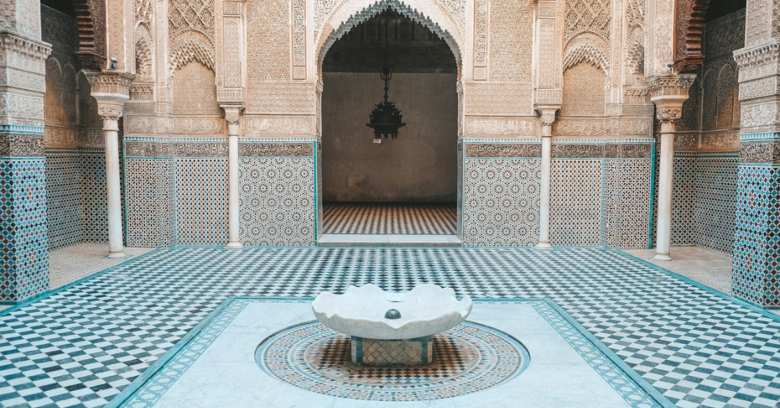
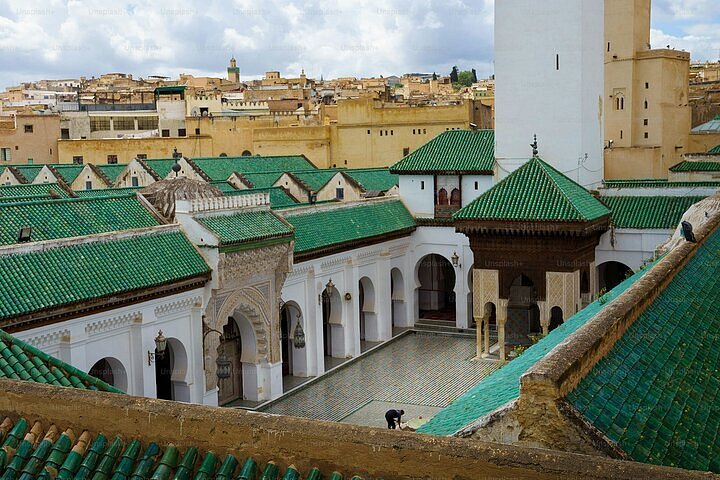
Is Sefrou really only thirty-two kilometers from Fez? It is. Yet how can it be so close, yet so different?
In Fez, everything is calm, introspective, silent, and restrained. In Sefrou, everything is spontaneous, exuberant, and extroverted—gestures are grand, voices loud, and emotions unfiltered. Watching the Fassis, one might think they have managed to banish all turmoil and disorder from their lives.
Meanwhile, the people of Sefrou seem like actors in a continuous melodrama or farce, their backdrop a maze of intimate courtyards, irregular alleyways, and rushing water channels—where surprises are common, misunderstandings expected, and tricks easily played.
A City of Women and Unending Drama
In Sefrou, women are everywhere—in the streets, at the windows, at the washhouses, in open courtyards. They move with as much agitation as the men, surrounded by nervous, noisy children tugging at their brightly colored skirts.
Sefrou never rests—each day brings new comedies or dramas, unfolding like an endless street theater.
Yet, it is also a wealthy town, blessed by nature’s generosity and an exceptional climate. Verdant like Eden itself, Sefrou is a land of water and abundance.
- Springs gush forth from the greenery.
- A river snakes through cultivated fields.
- African trees stand alongside European orchard trees, with cypresses and willows, banana trees and cherry blossoms.
- Rare early-season crops, fragrant flowers, and bountiful fruits flourish here.
- The pomegranate flower, roses, jasmine, and even irises, violets, and forget-me-nots grow together in a joyful creation of nature, as if the Book of Genesis had been laid open under the Moroccan sun.
The Jewish Heart of Sefrou
Indeed, Sefrou is Jewish (Though the town has a Muslim, European, and Jewish quarter, the Jewish presence gives the entire locality its distinctive atmosphere).
Settled long ago by Judaized Berbers from the south, Sefrou has remained faithful to its traditions, its customs, and its unique Berber-Jewish identity.
- Men and women wear colorful garments—partly from natural taste, but also, perhaps, as a defiant response to the humiliating black clothing once imposed by the sultans on Jews living in Muslim cities.
- Yet, some elderly men still wear the black coats of the mellah.
One day, we stumbled upon two schoolmasters in a dimly lit, vaulted room, attached to a synagogue.
Nothing in Sefrou is closed; one enters anywhere with ease.
Inside, we found two hundred and fifty boys packed into the room, their eyes bright with intelligence.
Pleased by our praise of their students, the teachers commanded them to recite a sacred poem in unison. Then, with no hesitation, they stretched out their hands for a fabor—a tip in gratitude for the performance.
Sefrou Before Passover: A Frenzy of Washing and Fire
One year, two days before Passover, we arrived by chance to find the women of Sefrou in a great ritual of purification.
Kneeling in the river, though actually perched on large, smooth stones, they washed every piece of household linen—for on Passover, only newly cleaned or freshly whitened clothes may be worn.
The scene was astonishing:
- A brilliant spring sun turned the young willow leaves almost golden.
- Clay ovens stood on rocks within the river, topped with copper cauldrons of boiling laundry water.
- The rhythmic pounding of washboards, the flashes of bright clothing, and the strange, coiled shapes of wrung-out garments resembled serpents resting in their nests.
- Reflections danced in the water, mingling with the gleam of sunlit copper pots and the flickering flames of the makeshift riverbank stoves.
It was a dizzying, otherworldly spectacle—like a vision of another realm, both mesmerizing and unsettling.
A Town Where Rivers Enter Homes
That same day, while wandering through Sefrou, we followed one of its ever-present water channels into several open courtyards—where it ran along red-brick paths.
Had these rivulets remained pure and clear, they would have been charming features of every home. But they had become open sewers.
The blood of freshly slaughtered animals, sacrificed for Passover, flowed into the streaming gutters, carrying with it all manner of household refuse.
The great holiday cleanings caused even greater disorder:
- Shawls embroidered with fine silk soaked beside animal intestines in large clay basins.
- Beautiful woolen carpets and silk belts lay tangled among kitchen utensils.
- And in the end, the courtyard where we were graciously offered rose jam was so muddy with blood and grime that we hesitated to accept such generous, yet chaotic hospitality.
“Where are you from? Do you have children? What! This beautiful girl isn’t married yet?”
The Coexistence of Berbers and Jews
In Morocco, Berber villages and Jewish villages often coexisted in a peculiar harmony, each fulfilling a role the other did not.
- The Berbers, farmers and herders, had no interest in trade.
- They relied on Jewish merchants to supply them with manufactured goods.
- The Berbers also despised hoarding money—spending everything they earned immediately.
- In times of hardship, they borrowed from Jewish lenders, sometimes pawning their most valued possessions, much like a European pawnshop.
Yet, these small transactions did not make the Jewish villagers rich. They remained modest, but self-sufficient.
Were they better off in the mountains than in the city mellahs? Perhaps.
In the mountains, they lived with more freedom, were less isolated, and likely happier, even if they were not wealthier.
Sefrou: A Jewish Paradise in Morocco
If there is one place where Jews were truly blessed in Morocco, it was Sefrou—this earthly paradise.
One cannot help but think of the struggles of the Jews in Palestine, their unceasing battles, hard-won victories, and uncertain future.
And yet, here, the Jews of Sefrou had lived in peace for seven centuries.
- They had endured invasions, but always liberated themselves.
- They lived prosperous, tranquil lives, governed by their own laws and traditions.
- They enjoyed privileges beyond measure:
- A miraculous climate.
- A fertile land.
- Water everywhere—in rivers, streams, and cascades.
A City of Eternal Improvisation
Happy Sefrou!
Yet, why has it never disciplined its restless spirit, as it has disciplined its land?
Or perhaps it prefers the exhilarating disorder, the perpetual state of unfinished business, as if always preparing for a journey, yet never departing?
No matter—it only makes Sefrou more picturesque.
Like a vividly painted poem, a living page of the Bible, an Orientalist painting come to life—this is Sefrou.